Startups are special because they let you build beautiful things for a world worth preserving. I see society as constrained collaboration, and startups as its most flexible vehicle where capitalism, done right, drives us toward abundance.
To play the venture game, you must optimize for it. Finding a way to justify deploying a million sensors across tundras, deserts, and rainforests is only one step of the way, even optimizing enough market when optimizing for impact. The next step was clear: two high-growth paths emerged either generalize the hardware or generalize the software leading to a live Google Earth. For that it was necessary to derisk both and see the outcome. For the purpose of finding those generalizations, I decided to split both derisk processes, i needed to find two seperate demonstrations for the products.
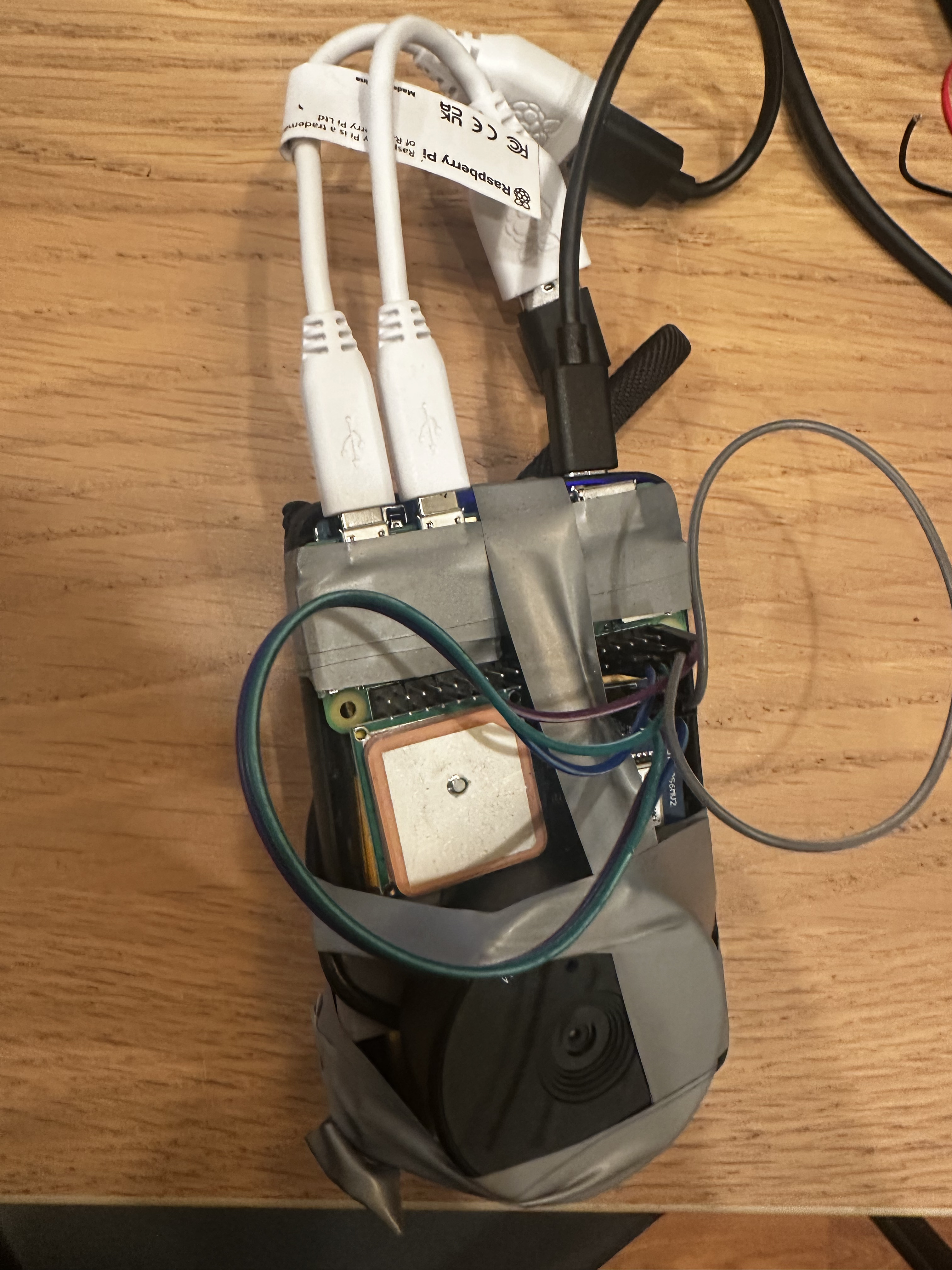
camera system prototype
I started with hardware. While experimenting with the camera system, I realized that cameras mounted on trees in remote ecosystems could share the same structure as ranger wearables simply by adding video, and gps on both. Both optimize for the same variables: low power, low cost, and minimal size (either to be worn or to remain undetectable).
Tuesday was spent sourcing parts and building a prototype bodycam/standalone camera for remote locations. Firmware took time errors in video encoding and soldering the battery slowed progress (see bodycam). Next, I needed to assess its potential in B2C, farming, and industrial contexts, so I scheduled calls with my network for later in the week. However, after much thought, I realized the best approach was to focus on demonstrating the product before raising funds. It was semi-functional, solved a clear pain point perhaps not a massive market yet, but a real one.